
EACC Flags Corruption Risks in CAIPs Project, Calls for Stronger Safeguards
The Ethics and Anti-Corruption Commission (EACC) has warned that systemic weaknesses surrounding the implementation of the County Aggregation and Industrial Parks (CAIPs) Programme could perpetuate corruption if not urgently addressed.
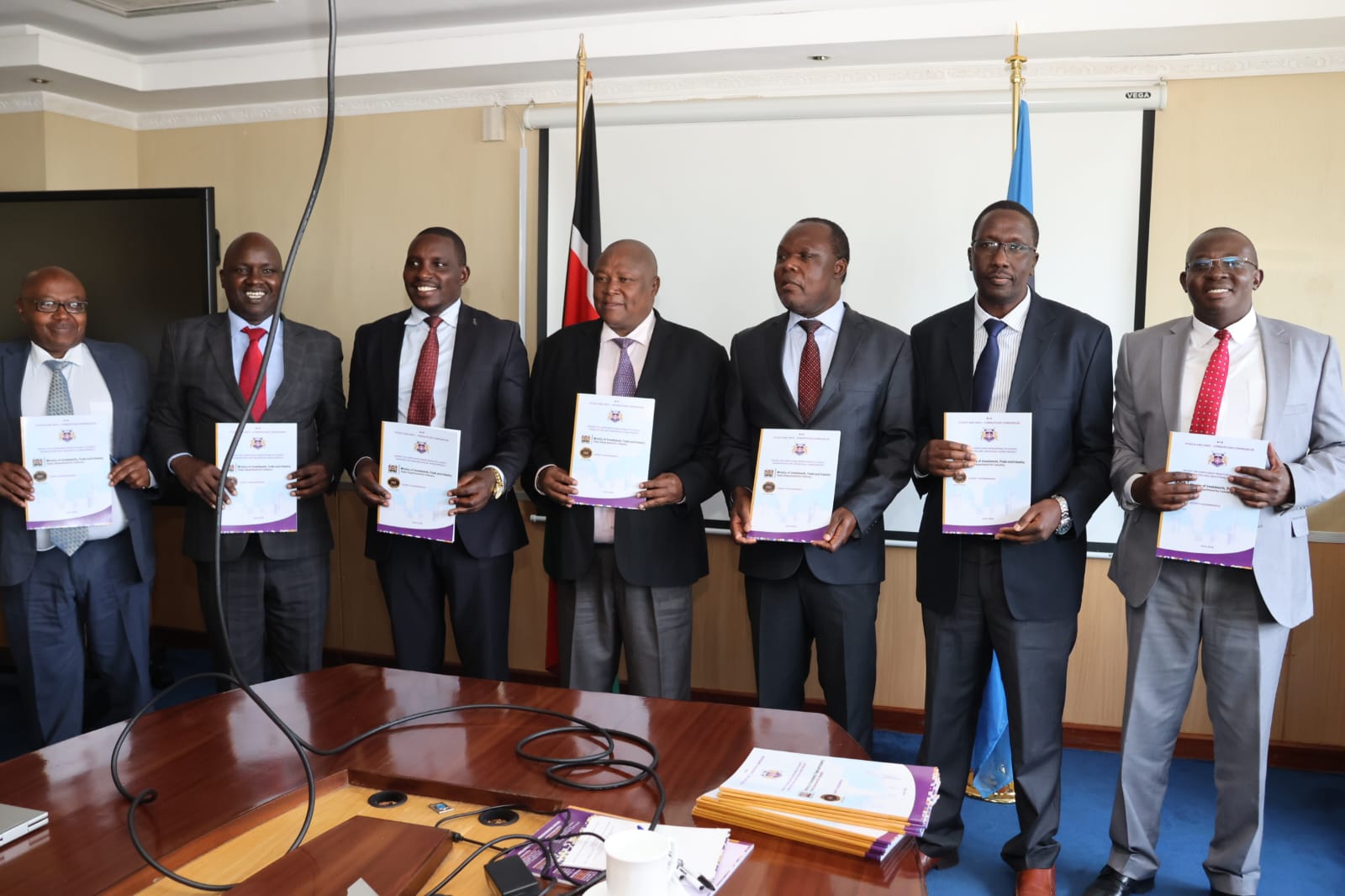
The Commission presented its Compliance Monitoring Report on the implementation of the CAIPs Project to the Principal Secretary, State Department for Industry, Dr. Juma Mukhwana. The Commission was represented by its Director of Legal Services, Mr. Ben Murei, on behalf of EACC Commissioner Dr. Cecilia Mutuku.
The report underscores the need to ensure that the procurement, construction, management and operationalisation of CAIPs are undertaken in compliance with applicable laws, regulations and policies, as well as the principles of integrity, accountability and prudent use of public resources.
Dr. Mukhwana said the CAIPs Programme was a unique Government initiative with significant potential to support manufacturing, value addition and job creation across the country.
“This project has received substantial financial support unlike many other Government projects. However, implementation has not progressed at the desired pace in some counties,” he said, urging counties where progress remained slow to demonstrate greater commitment and accountability.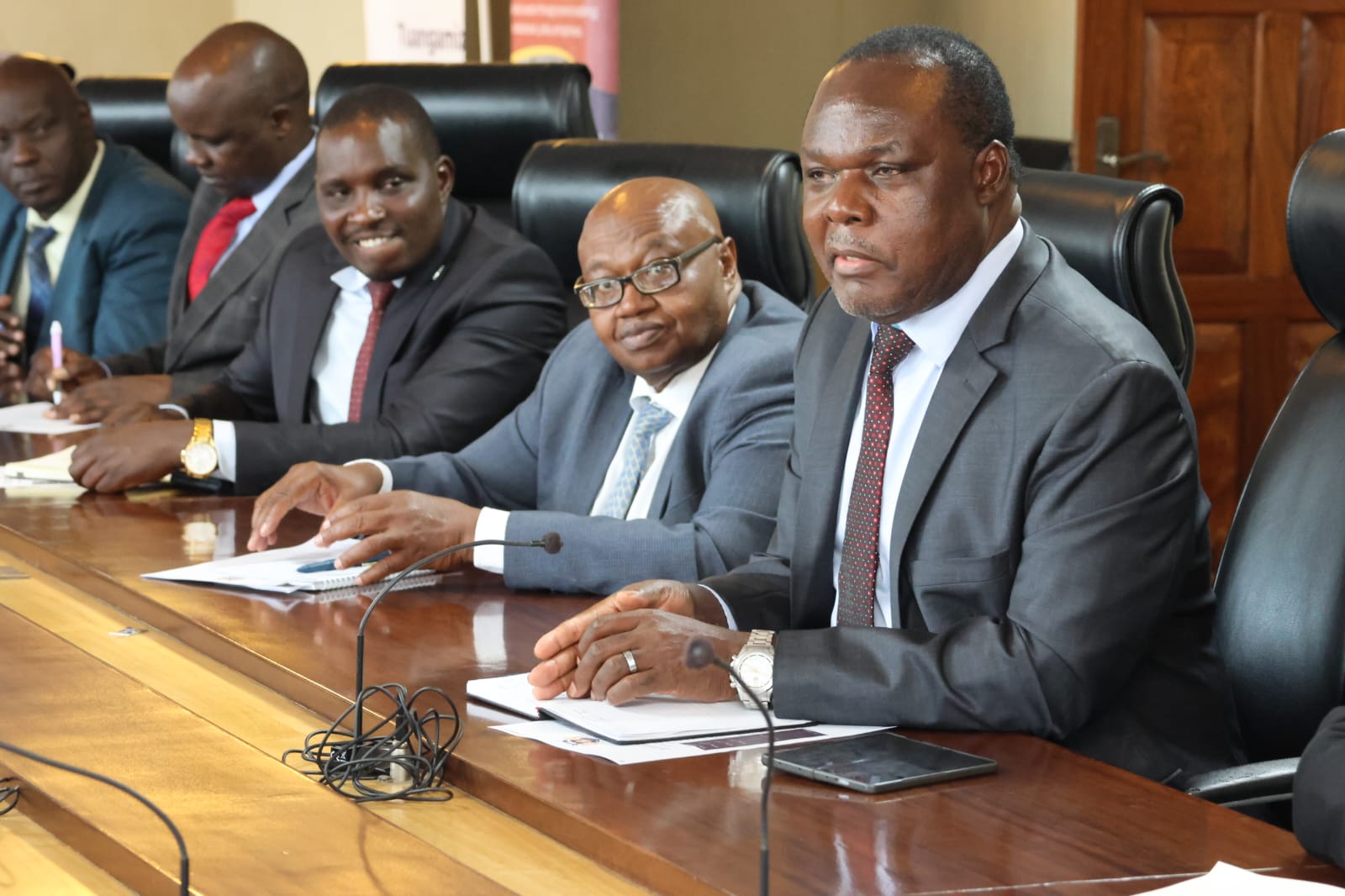
Dr. Mukhwana commended Meru, Wajir, Garissa, Kirinyaga, Kisii, Migori, Embu and Machakos counties for being front runners in advancing implementation, despite the challenges encountered.
Mr. Murei raised concerns over unclear land ownership in some counties, which had left the industrial parks vulnerable to grabbers, and urged implementers to expedite the acquisition of the parcels.
EACC Director for Preventive Services, Mr. Vincent Okong'o, noted that a major concern was the mismanagement of public funds through failure to use the Central Bank’s Special Purpose Account (SPA).
The report notes that several counties are yet to fully deposit their share of funds into the SPA, while Nakuru and Homa Bay counties were found to be operating CAIP accounts through commercial banks instead of the Central Bank, exposing the funds to risks of mismanagement.
The project is a collaboration between the national and county governments, with each party contributing Ksh.250 million towards construction.
“Gaps in project feasibility studies, geological surveys, development of concept notes and appraisal studies led to arbitrary selection of project sites, hampering implementation and further undermining evidence-based decision-making,” he said.
The report also cites irregular spending, including an advance payment of Ksh.94 million by Kisii County to the contractor before the commencement of works, although the matter has since been regularised. Bungoma County was also cited for utilising Ksh.16 million meant for construction on training committees.
Other challenges flagged include the abandonment of sites without notice by contractors in Uasin Gishu and Bungoma counties. The contractors have since resumed work.
Increased project costs resulting from variations, as well as weak monitoring and evaluation that did not follow key performance indicators, also exposed the projects to corruption risks.
Most counties lacked governance instruments, including Special Purpose Vehicles (SPVs), to jumpstart operations upon completion. EACC also recommended the development of key enablers such as roads, water and sewerage infrastructure.
The State Department reaffirms its commitment to continue collaborating with EACC and the Council of Governors (CoG) to develop an implementation matrix for the recommendations, anchored on more binding agreements, to safeguard land, secure key enablers and ensure that the parks are delivered for their intended purpose.
For more information, please contact:
Anne Sabuni
Head of Communications
State Department for Industry
Email: ann.sabuni@industrialization.go.ke